





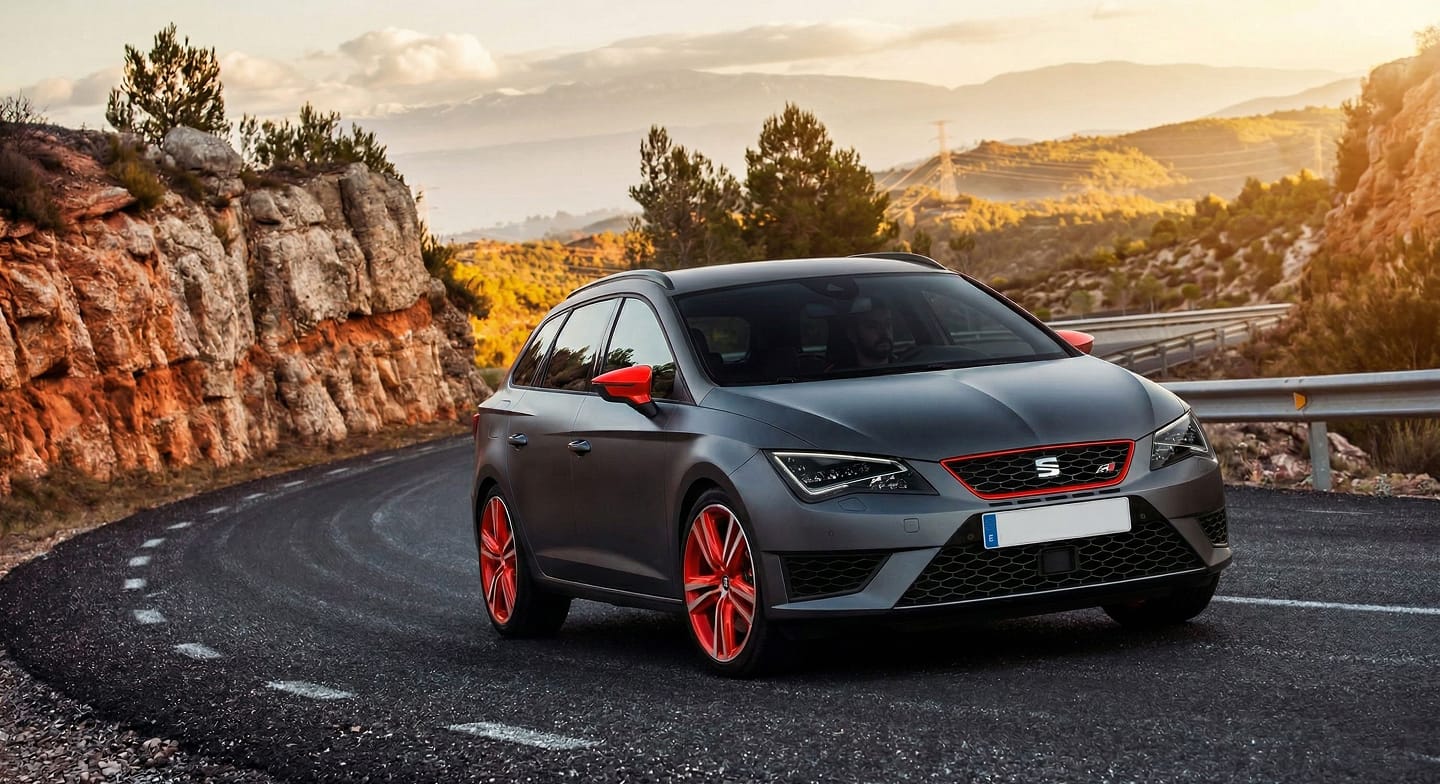
Performance Chip Tuning Seat
Up to 30% more power for your Seat
The Seat catalog lists 187 engines (models: 11, generations: 19). For 66% of the engines, there are the GAN GT (up to 30% more power) and GAN GTL (up to 25%) tuning modules; for the rest, the GAN GA and GAN GA+ (up to 12%). Each engine’s figures are on its own page.
Seat performance chip: more power, no ECU flash
The GAN module sits between the sensors and the engine control unit (ECU) and adjusts their signals. Unlike a flash tuner, it doesn’t rewrite your ECU software: your factory warranty is preserved, and the module can be removed at any time.
- Bluetoothswitch modes from your phone
- 18 mapsto fine-tune your engine
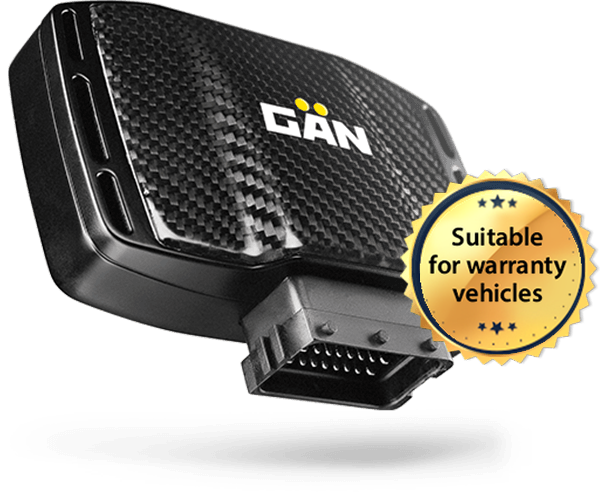
- 15 minutesplug-and-play install
- IP67water and dust protection
- up to +30%more power with the GAN GT
Turbo engines pick up +15 to +77 hp, depending on the engine.
- up to +12%for naturally aspirated engines with the GAN GA+
GAN GA and GAN GA+ tuning modules for 27 naturally aspirated engines from Seat; see the catalog for each engine’s figure.
- GAN APPpower control via smartphone
Switch between SPORT, DYNAMIC, ECO and STOCK in the GAN app.
- 50 daystest drive
Enhanced performance or your money back, excluding shipping costs.
Choose your Seat model
Each model lists its generations: one click gets you to a generation, two to an engine.
The biggest Seat gains
The six engines with the biggest gains in our catalog. These are the top of the range, not typical figures.
| Model · generation | Engine | Fuel | STOCK | With GAN | Gain | Tuners and prices |
|---|---|---|---|---|---|---|
| Leon Leon (1P) 2005-12 | 2.0 TFSI Cupra 310 Limited Edition | Diesel | 310 hp / 425 Nm | 387 hp / 534 Nm | +77 hp | GTL from 279 EUR GT from 459 EUR |
| Leon Leon (1P) 2005-12 | 2.0 TFSI Copa Edition | Gasoline | 286 hp / 360 Nm | 359 hp / 457 Nm | +73 hp | GTL from 249 EUR GT from 399 EUR |
| Leon Leon (5F) 2012-> | 2.0 TSI Cupra | Gasoline | 300 hp / 380 Nm | 373 hp / 500 Nm | +73 hp | GTL from 279 EUR GT from 459 EUR |
| Leon Leon (5F) 2012-> | 2.0 TSI Cupra 265 | Gasoline | 265 hp / 350 Nm | 335 hp / 445 Nm | +70 hp | GTL from 249 EUR GT from 399 EUR |
| Leon Leon (1P) 2005-12 | 2.0 TFSI Cupra | Gasoline | 241 hp / 300 Nm | 306 hp / 385 Nm | +65 hp | GTL from 249 EUR GT from 399 EUR |
| Altea Altea | 2.0 TFSI | Gasoline | 211 hp / 280 Nm | 275 hp / 381 Nm | +64 hp | GTL from 249 EUR GT from 399 EUR |
Seat tuning FAQ
1.9 or 2.0 TDI in a Leon or Ibiza: pump injector or common rail?
The catalog lists pump injector (PD) and common rail (CR) versions separately, even at the same power. In the Leon II, PD engines carry codes like BKD and common rail engines codes like CFHC, so check your code before choosing.
How much power does the GAN GT add to the 1.4 TSI and other SEAT turbo gasoline engines?
In the catalog, the Ibiza 1.4 TSI goes from 150 hp and 240 Nm to 195 hp and 315 Nm with the GAN GT. The 1.0, 1.2 and 1.4 TSI each have their own entry, and so do the Ibiza 1.4 TSI FR and Cupra. Those are stated gains for the engine type, not what a dyno would show on your own car.
What does a GAN GA+ plug-and-play performance chip do for a SEAT 1.4 MPI, 1.6 or 2.0 FSI?
All of these are naturally aspirated gasoline engines, so they take the GAN GA+, rated up to 12% more power.
Plug-in performance chip or flash tune for a SEAT TSI or TDI?
A flash tune rewrites the factory software. The GAN tuning module doesn't: it works between the engine sensors and the ECU and adjusts their signals. Checksums, flash counter and factory software stay untouched, and the engine keeps its factory protections. Your factory warranty is preserved. The ECU software never changes, and you can remove the module at any time.
Does the GAN module affect my Seat factory warranty?
No. The module doesn’t change the ECU software and can be removed at any time, so your factory warranty is preserved. On top of that, GAN gives its own engine warranty: 2 years with the GAN GT, 1 year with the GAN GTL.
Plug-in performance chip or flash tuner: which should I choose?
A flash tuner rewrites the maps in your ECU, and the flash counter records it. The GAN module adjusts the sensor signals instead: the ECU stays in factory condition, and you can return the car to stock in about a minute.
Seat engines: what to know before you tune
SEAT tune: Volkswagen engines under a Spanish badge
SEAT has never been sold new in the U.S., so the SEATs here are European-market cars, and their engine code matters more than its badge. That makes a SEAT tune a Volkswagen Group question. SEAT has belonged to the group since 1986 and shares engines with Volkswagen, Audi and Škoda. Take the Leon III: it runs the EA211 (1.0 to 1.5 TSI), the EA888 (1.8 and 2.0 TSI) or the EA288 (1.6 and 2.0 TDI). Those are the same engine families you find in the Golf, the Octavia and the A3 of the same years.
SEATs keep their European names, including Ibiza, León, Ateca, Arona and Tarraco. Two names sit on the cars, SEAT and Cupra, and Cupra has been a brand of its own since 2018. Until 2018, Cupra was simply the top trim, on cars like the Leon Cupra and the Cupra R. The Leon and the Ibiza are SEAT's two core models.
SEAT performance chip basics: reading engine names
See TSI on a SEAT and expect a turbo plus direct injection, whether it is the 1.0 or the 2.0. TFSI is the older badge for the same engine type. The Leon II FR, Cupra and Cupra R carried the 2.0 TFSI. Without a turbo, FSI means direct injection alone, which makes the 1.6 FSI and 2.0 FSI naturally aspirated. MPI engines, like the 1.0 MPI in the Ibiza V, are naturally aspirated gasoline engines with multipoint injection.
Every TDI is a turbodiesel. Through the end of the 2000s it used pump injectors (PD); after that, common rail. On the 1.4 TSI with 150 hp and on the 1.5 TSI, ACT switches off two of the cylinders. Ecomotive is a package for lower fuel use, like the 1.6 TDI Ecomotive, not a separate engine. Most turbo engines take the GAN GT, rated up to 30% more power, and naturally aspirated ones take the GAN GA+, rated up to 12%. The catalog entry for your engine decides which one applies.
Read moreShow less
Cupra, FR and the Ibiza
The FR trim (Formula Racing) is the sporty one, a step below Cupra. Over the years the Leon Cupra moved from the 1.8T (180 to 225 hp) through the 2.0 TFSI (240 to 265 hp) to the 2.0 TSI (265 to 300 hp). From 2009 to 2015, the Ibiza Cupra and FR used the 1.4 TSI Twincharger, which combines a supercharger and a turbo. In 2015 the Cupra switched to the 1.8 TSI with 192 hp.
Which SEAT models are in the catalog
The catalog goes well past the Leon and Ibiza: Altea, Toledo, Cordoba, Arosa, Alhambra, Exeo, Ateca, Arona and Tarraco are in there too. Two cars are missing: the Inca, a van based on the Volkswagen Caddy, and the Málaga, a four-door Ibiza-based car from the 1980s.
Which Seat models are in the catalog
The catalog lists 11 models from Seat. The most engines are listed for the Ibiza (56), Leon (45) and Toledo (21). The biggest gain among the models is on the Leon: up to +77 hp.
Naturally aspirated Seat engines
For 27 naturally aspirated engines from Seat, there’s the GAN GA+: up to 12% more power and up to 15% better fuel economy in ECO mode. It’s plug-and-play: you can install it yourself, in most cases in under 15 minutes.
How to find your Seat engine
Pick your model in the list above, then the generation by model year, and the engine by displacement and horsepower (see your owner’s manual or vehicle documents). The engine page shows the exact gain and the tuner price.