





Performance Chip Tuning Suzuki
Up to 30% more power for your Suzuki
The Suzuki catalog lists 130 engines (models: 26, generations: 33). For 21% of the engines, there are the GAN GT (up to 30% more power) and GAN GTL (up to 25%) tuning modules; for 102 naturally aspirated engines, the GAN GA and GAN GA+ (up to 12%). Each engine’s figures are on its own page.
Suzuki performance chip: more power, no ECU flash
The GAN module sits between the sensors and the engine control unit (ECU) and adjusts their signals. Unlike a flash tuner, it doesn’t rewrite your ECU software: your factory warranty is preserved, and the module can be removed at any time.
- Bluetoothswitch modes from your phone
- 18 mapsto fine-tune your engine
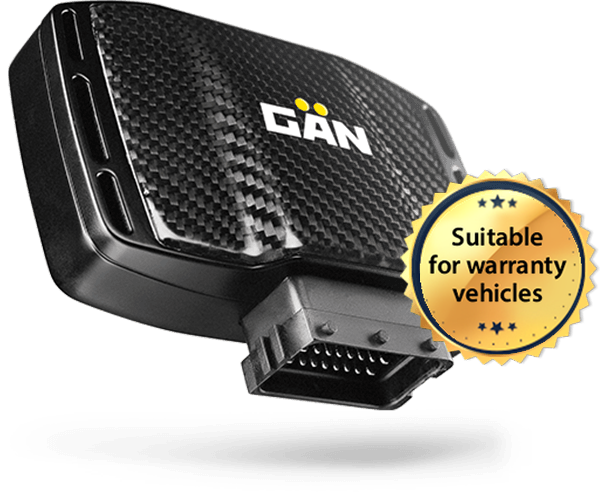
- 15 minutesplug-and-play install
- IP67water and dust protection
- up to +30%more power with the GAN GT
Turbo engines pick up +20 to +41 hp, depending on the engine.
- up to +12%for naturally aspirated engines with the GAN GA+
GAN GA and GAN GA+ tuning modules for 102 naturally aspirated engines from Suzuki; see the catalog for each engine’s figure.
- GAN APPpower control via smartphone
Switch between SPORT, DYNAMIC, ECO and STOCK in the GAN app.
- 50 daystest drive
Enhanced performance or your money back, excluding shipping costs.
Choose your Suzuki model
Each model lists its generations: one click gets you to a generation, two to an engine.
The biggest Suzuki gains
The six engines with the biggest gains in our catalog. These are the top of the range, not typical figures.
| Model · generation | Engine | Fuel | STOCK | With GAN | Gain | Tuners and prices |
|---|---|---|---|---|---|---|
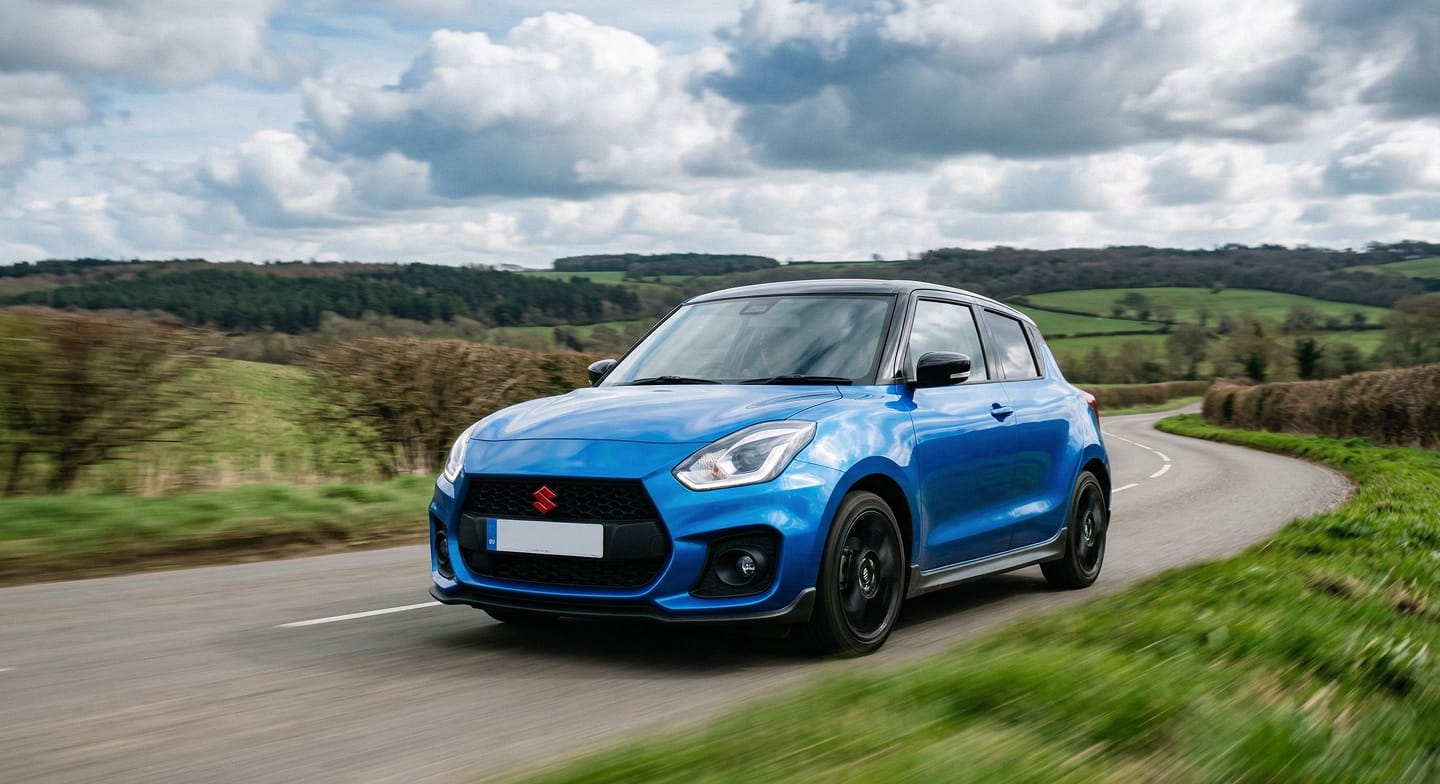
| Swift Swift (V) 2017-> | Sport 1.4T | Gasoline | 140 hp / 230 Nm | 181 hp / 297 Nm | +41 hp | GTL from 219 EUR GT from 329 EUR |
| Vitaras Vitara 2015-> | 1.4 Boosterjet | Gasoline | 140 hp / 220 Nm | 181 hp / 284 Nm | +41 hp | GTL from 219 EUR GT from 329 EUR |
| SX4 SX4 | 2.0 DDIS | Diesel | 135 hp / 320 Nm | 175 hp / 409 Nm | +40 hp | GTL from 219 EUR GT from 329 EUR |
| Grand Vitara Grand Vitara (III) 2005-15 | 1.9 DDIS | Diesel | 129 hp / 300 Nm | 166 hp / 387 Nm | +37 hp | GTL from 219 EUR GT from 329 EUR |
| Vitara Vitara | 1.9 DDiS | Diesel | 129 hp / 300 Nm | 166 hp / 387 Nm | +37 hp | GTL from 219 EUR GT from 329 EUR |
| Vitaras Vitara 2015-> | 1.4 Boosterjet | Gasoline | 129 hp / 235 Nm | 166 hp / 303 Nm | +37 hp | GTL from 219 EUR GT from 329 EUR |
Suzuki tuning FAQ
Whose diesel is in my Suzuki, and which GAN module fits?
DDiS is a label for engines from Fiat, Renault and PSA. Use your model and years from the list above to find the maker. In the catalog every DDiS version takes the GAN GT, and each power output has its own entry.
What does the GAN GT add to the Swift Sport 1.4 Boosterjet?
The Swift Sport 1.4 Boosterjet goes from 140 hp and 230 Nm to 181 hp and 297 Nm with the GAN GT. Those are stated gains for the engine type, not what a dyno would show on your own car.
Boosterjet or Dualjet: which performance chip fits?
A Boosterjet is a turbo, so it takes the GAN GT. A naturally aspirated Dualjet takes the GAN GA+.
Plug-in performance chip or flash tune for a Suzuki Boosterjet or DDiS?
A flash tune rewrites the factory software. The GAN tuning module doesn't: it works between the engine sensors and the ECU and adjusts their signals. Checksums, flash counter and factory software stay untouched, and the engine keeps its factory protections. Your factory warranty is preserved. The ECU software never changes, and you can remove the module at any time.
Does the GAN module affect my Suzuki factory warranty?
No. The module doesn’t change the ECU software and can be removed at any time, so your factory warranty is preserved. On top of that, GAN gives its own engine warranty: 2 years with the GAN GT, 1 year with the GAN GTL.
Plug-in performance chip or flash tuner: which should I choose?
A flash tuner rewrites the maps in your ECU, and the flash counter records it. The GAN module adjusts the sensor signals instead: the ECU stays in factory condition, and you can return the car to stock in about a minute.
Suzuki engines: what to know before you tune
Suzuki tune: DDiS is a trade name for bought-in diesels
Suzuki announced in 2012 that it was leaving the U.S. car market, and the badges it sold there included Aerio, Forenza, Grand Vitara, Kizashi, Reno, SX4 and XL7. A Suzuki SX4 performance chip starts with the engine: the U.S. SX4 runs a naturally aspirated 2.0-liter four rated at 143 hp in the 2007 to 2009 cars and 150 hp in later ones, and the table has a 2.0i row at each figure. The XL7's naturally aspirated 3.6-liter V6 is rated at 252 hp, and the catalog has an XL7 row to match by hp. The Forenza's 2.0-liter four is rated at 127 hp, and the Grand Vitara's 2.4-liter four at 166 hp; both are naturally aspirated and belong with the GAN GA+ — the Forenza row reads 127, and the Grand Vitara (III) 2.4i rows read 167 and 169, metric figures for the same engine. The diesels below are European, and the first question for any of them is whose engine sits in your Suzuki. Every Suzuki diesel comes from another maker. DDiS is just the trade name for these bought-in turbodiesels, mostly common-rail.
The 1.3 D13A is a Fiat engine that powered the Swift from 2005 to 2013, the Ignis II and the Splash. Another Fiat unit, the 1.6 D16AA, ran in the Vitara (2015 to 2018) and the SX4 S-Cross (2013 to 2018). The SX4 itself got two Fiat diesels. First the 1.9 D19A with 120 hp, built from June 2006 to August 2009; then the 2.0 D20A with 135 hp, from September 2009 to June 2014. From Renault came the 1.5 K9K, at 65 and 86 hp, for the Jimny JB53, and the 1.9 F9Q, at 129 hp, for the Grand Vitara from 2005 to 2015. PSA's 1.4 DV4, at 90 hp, went into the Liana from 2004 to 2007.
Gasoline engines: K series, Dualjet and Boosterjet
The K series is Suzuki's gasoline family from 1.0 to 1.5 liters: three-cylinder K10B and K10C, and four-cylinder K12B, K12C, K14B, K14C and K15B. Read the name this way: K is the series, the digits are the displacement, and the final letter is the variant. Both kinds of engine live in the series: the K14C is a turbo, the K14B is naturally aspirated. Dualjet is the updated naturally aspirated K engine from 2013, with two injectors per cylinder and no turbo. The Swift's 1.2 K12C with 90 hp is an example.
A Boosterjet adds a turbo and direct injection. You get it as the 1.0 K10C at 111 to 112 hp or the 1.4 K14C at 140 hp. On K engines, SHVS adds a mild-hybrid starter generator, either 12 V or 48 V. ALLGRIP is a four-wheel-drive system, not an engine, so it tells you nothing about power. Turbo engines take the GAN GT, rated up to 30% more power. Dualjet and other naturally aspirated K engines take the GAN GA+, rated up to 12%.
Read moreShow less
Models and sporty versions
In June 2018 the Swift Sport swapped its 1.6 M16A (125 and 136 hp) for the 1.4 Boosterjet, which makes 140 hp. For the Vitara, Swift, SX4 S-Cross, Jimny and Ignis, a tune always starts from the engine name.
Which Suzuki models are in the catalog
The catalog lists 26 models from Suzuki. The most engines are listed for the Swift (20), Grand Vitara (17) and Alto (14). The biggest gain among the models is on the Swift: up to +41 hp.
Naturally aspirated Suzuki engines
For 102 naturally aspirated engines from Suzuki, there’s the GAN GA+: up to 12% more power and up to 15% better fuel economy in ECO mode. It’s plug-and-play: you can install it yourself, in most cases in under 15 minutes.
How to find your Suzuki engine
Pick your model in the list above, then the generation by model year, and the engine by displacement and horsepower (see your owner’s manual or vehicle documents). The engine page shows the exact gain and the tuner price.